RED UTOPIA (2022–ongoing)
Red Utopia is an ongoing performative project that unfolds through the repetitive act of knitting and unraveling a red textile form shaped as a flag.
The work began in 2022 in Munich as a response to the Russian Federation’s attempt to revive Soviet imperial structures — an effort to reconstruct a system in which human life is subordinated to ideology. Rather than reproducing the flag as a symbol of power, the artist engages with it as a material and process — a structure that can be built, undone, and reconfigured.
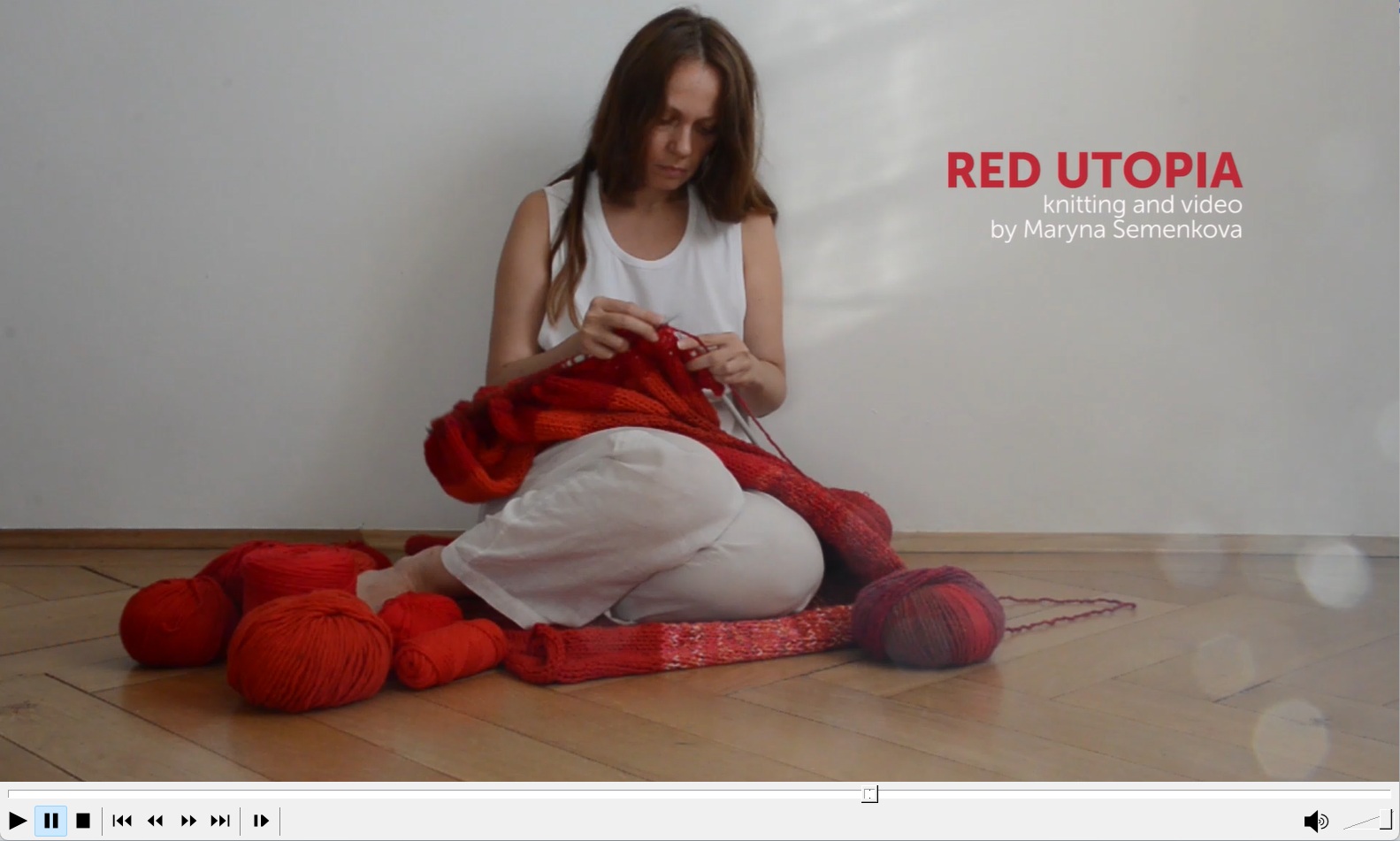
Through the slow and repetitive gesture of knitting, the work reflects on the persistence of colonial systems and the violence of imposed historical repetition. The act of unraveling becomes equally significant: a gesture of deconstruction, reflection, and the possibility of transformation.
First iteration (2022)
During the first iteration, the artist knitted a red flag over 77 hours across 22 days, beginning on August 24 — Ukraine’s Independence Day. The entire process was documented on video.
In the final performative act, the knitted object was unraveled back into a red yarn ball, while the video of its creation was shown simultaneously. This gesture established the core structure of the project: a cycle of construction and dissolution, presence and reflection.

Second iteration (2025–ongoing)
The second iteration began on 9 May 2025—a date heavily instrumentalized by the Russian state as a vehicle for propaganda through the official narrative of victory in the Second World War. By choosing this date, the work critically engages with the manipulation of historical memory and its role in sustaining contemporary violence.
Using the same ball of yarn created after the first iteration, the artist began knitting the form again, gradually adding new threads and expanding its scale. The material carries the memory of the previous cycle, while its transformation represents a continuation rather than a mechanical repetition.
At the current stage, the knitted object has been completed. It was finished on 9 May 2026, exactly one year after the beginning of the second iteration. The knitting process lasted a total of 94 hours.
The object is intended to be unraveled once again during a live performance, producing an even larger ball of yarn and initiating the next phase of the cycle.
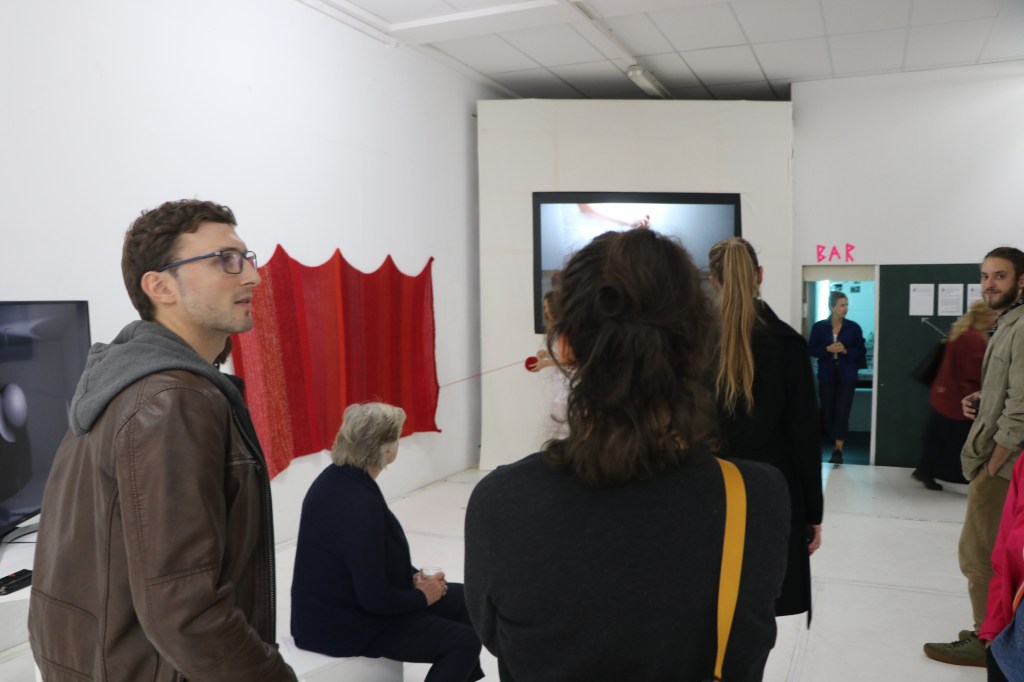

Location: Munich, Germany. Duration: 77 hours in 22 days + 90 minutes.
Repetition as structure
At its core, Red Utopia is a performative investigation into repetition — both political and existential.
The work reflects on the human tendency to reproduce destructive patterns, even when their consequences are known. Systems of power, like individual behavior, often return to familiar structures, repeating forms that are deeply embedded in memory and the body.
At the same time, the project asks whether reflection can interrupt this cycle — and what role conscious awareness plays in the transformation of traumatized societies.
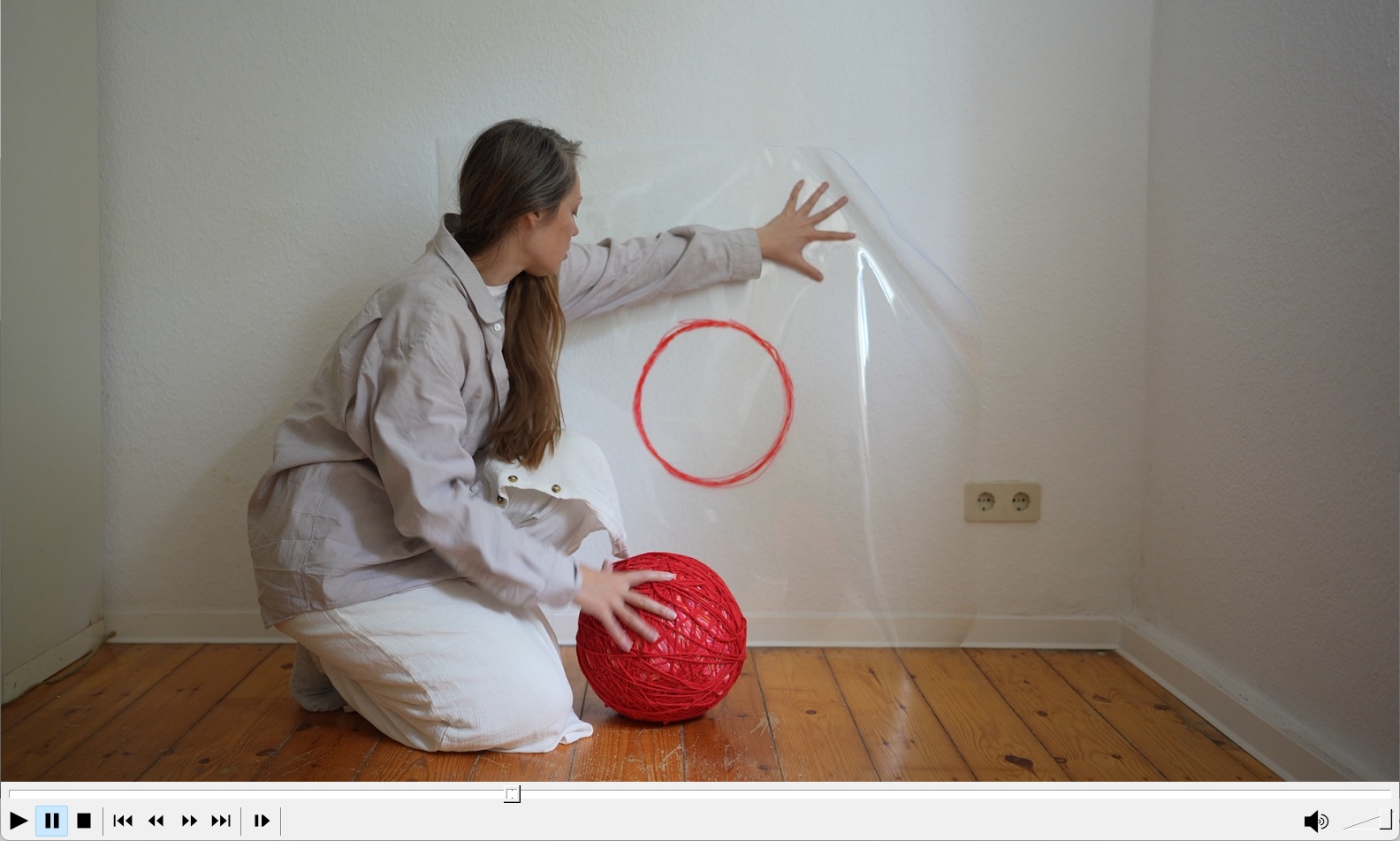
The red yarn ball becomes a point of potential: a state in which any form is possible. Yet the artist repeatedly reconstructs the same object, revealing the difficulty of moving beyond inherited structures.
Process and medium
Performance is the primary medium of the work. The act itself — sustained, repetitive, and time-based — becomes a form of thinking.
Video and photography are not secondary documentation but integral elements of the project. They create a parallel temporal layer, allowing the process to be observed, repeated, and reflected upon.
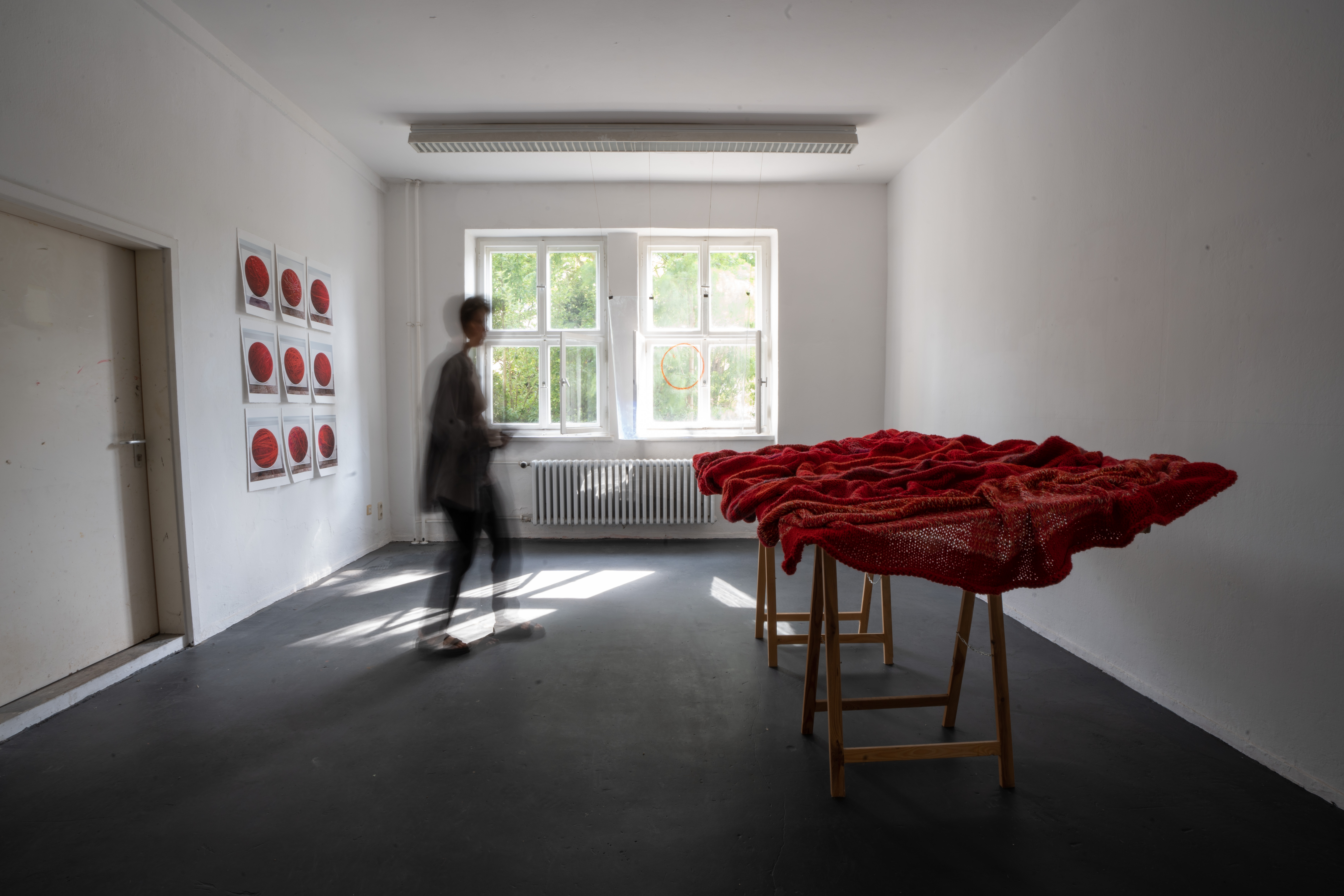
The work exists across:
- material traces (yarn ball, size markings)
- live performance (knitting / unraveling)
- video documentation of the process
- photographic representations of transitional forms


Long-term cycle
Red Utopia is conceived as a long-term performative cycle.
Each iteration repeats the same gesture — knitting and unraveling — while increasing the scale of the yarn ball through the accumulation of new material. Over time, the project expands both physically and conceptually, tracing the persistence of historical memory and embodied repetition.
Rather than seeking resolution, the work remains in process — a continuous movement between construction and dissolution, memory and transformation.
Full video documentation available upon request.
As part of the prject, the artist creates Collective archive of memory—an evolving participatory archive that invites visitors to contribute personal memories connected to life in the Soviet Union and its aftermath.
The invitation is addressed to people from the post-Soviet region, former East Germany, and to anyone whose life has been shaped by memories of Soviet influence, regardless of where they lived. Participants may anonymously share stories, fragments of memory, emotions, or reflections through a dedicated online platform created specifically for the project.
Selected contributions, shared with the authors’ consent, may become part of the exhibition as an evolving public archive, while others will remain private. The project values both visibility and confidentiality, recognizing that some memories are meant to be shared collectively while others require a protected space.
Rather than collecting historical testimonies, Collective archive of memory creates a space for reflection. It asks how personal memories become part of collective history, how political systems continue to inhabit everyday experience, and how the act of remembering can itself become a relational practice. In this way, visitors are invited not only to witness the work but to participate in an ecology of shared memory.

